The Sculptress of Light: In Conversation with Ilana Belsky
- Florènia Magazine

- Mar 30
- 4 min read
Beyond the brilliance of symmetrical cuts lies a world of freeform beauty. We explore how Ilana is reviving the endangered craft of British diamond cutting. One hand-sculpted stone at a time.
What is a diamond?
Diamonds have always carried this sense of romance and symbolism. Since they were first discovered, people have revered them, set them in jewellery, and used them to mark some of the most important and romantic moments in their lives.
What I find fascinating is that, in contrast to that, the same material we associate with love and rarity is also fundamental to industry. They use diamonds to cut, grind and shape so much of the world around us.
That duality draws me in. A diamond can be something deeply meaningful and yet something highly functional. My role is to take it from its raw state and bring out what makes it unique and beautiful.
What is "wrong" with the contemporary tools?
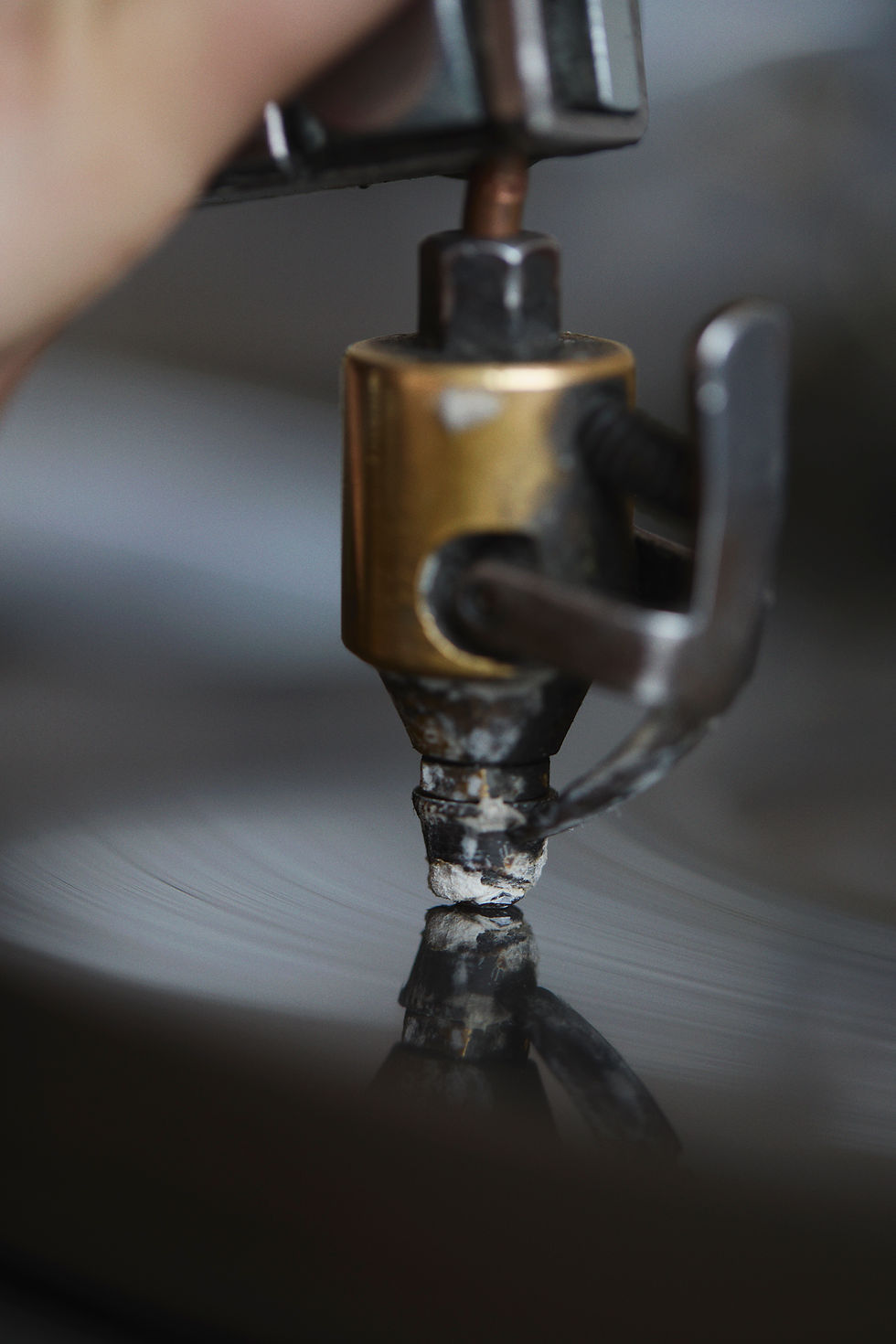
There’s nothing inherently wrong with modern tools; they’re incredibly efficient. But that efficiency can come at the cost of character. Contemporary diamond cutting is largely driven by optimisation, symmetry, yield, and consistency. It’s a highly technical process, using precision machinery and repeatable methods to achieve uniform results.
"The way I work is much slower, more hands-on and creative. I use traditional tools and make decisions as I go, responding to the individual diamond and letting it guide my process."
I think of it as the difference between a technician and a craftsperson. One is executing a process, the other is responding to what’s in front of them. I tend to go a step further and think of what I do as closer to art, like diamond sculpting.
The diamonds I cut aren’t standardised, or seen as 'perfect' by traditional standards, but that’s exactly what gives them their individuality.

The craft is often built upon skills passed down through generations. How has your father’s influence shaped your own approach to diamond cutting?
My father was a pioneer. He was constantly experimenting with new cuts and always focused on how to get the very best from each diamond. He approached both diamond cutting and life with an independence of mind, a willingness to question convention and follow his own path.
I’ve definitely inherited that mindset! While I’ve built on the foundations he passed down, I share his instinct to explore, to adapt, to experiment and to make decisions based on the individual diamond rather than formulas.
That influence continues to shape not just how I cut, but how I think about the craft, and life as a whole.
A piece of jewellery is rarely just an object; it is a vessel for a memory. How does it feel to know that your diamonds will become parts of precious moments and the future heirlooms of the families who wear them?
A diamond I cut could exist in its form potentially forever. That’s quite an extraordinary thought!
Earlier in my career, the diamonds I cut often felt somewhat detached from the personal stories they would eventually become part of. I saw my role as creating the foundation for other designers to build those pieces. Occasionally, though, people would get in touch to say that my father or I had cut their diamond, and that created a sense of connection I hadn’t fully felt before.
Since developing my own range of jewellery using the diamonds I cut, that connection has become much more direct. I now see the diamonds not just as one part of the story, but as pieces that will carry personal meaning for the people who wear them.
That shift has added another layer to my work, making the process feel much more connected to the lives the jewellery ultimately becomes part of.

The diamond industry is often complex. What are the non-negotiable principles that guide your ethics?
The diamond industry is indeed complex, so for me it comes down to being as conscious and transparent as possible in the way I work.
Sourcing is a key part of that. I work with trusted suppliers, and all of the rough diamonds I use are Kimberley Process certified. At the same time, I try to go beyond that by understanding as much as I can about where each stone has come from.
It’s not always a perfect system, but working with suppliers that share my ethics, making informed choices and asking questions is important.
Because diamond cutting is now a critically endangered craft in the UK, I’m also conscious of supporting what remains of the wider trade. Wherever possible, I source materials, tools, services and packaging from UK-based makers and manufacturers, helping to sustain the broader craft network around it.
Working on a smaller scale allows me to keep the process more considered, fewer steps, less waste, and more intention behind each piece, including packaging and production.
I’m also exploring lab-grown diamonds as an alternative for clients who prefer that option, while maintaining the same approach to cutting and design.


